Top Hyros Alternatives for Shopify Stores in 2026
Hyros is not a bad tool. It is just not built around the way most Shopify stores operate.
It came from the high-ticket funnel world: booked calls, long sales cycles, info products, and paid media teams that can justify enterprise pricing.
A Shopify brand usually needs something different. Clean attribution, server-side conversion data, product/order context, and a way to recover Klaviyo carts that browser tracking missed.
That is why this list focuses on Hyros alternatives that make sense for ecommerce, not generic attribution platforms with a Shopify checkbox.
Numbers below assume roughly $1M/yr in revenue and $350K/yr in ad spend. Recheck pricing before buying because competitor pricing changes often.
Why Shopify brands usually do not need Hyros
Hyros is strongest when attribution has to connect ads to calls, leads, long sales cycles, and high-ticket purchases.
Shopify attribution is more direct. You need to know which campaigns, products, customers, and orders actually drove revenue. You also need clean conversion data sent back to ad platforms and better recovery for carts Klaviyo missed.
If that is the job, a Shopify-native tool is usually easier to set up, easier to trust, and cheaper to run.
Quick Comparison: Pricing & Features
Just for comparison: Hyros would be $997 / month.
| Platform | Price | Server in Europe | Multi-Store | Klaviyo Integration (S2S) |
|---|---|---|---|---|
| Venon | $199/mo | ✓ | ✓ | ✓ |
| Triple Whale | $429/mo | ✗ | ✓ | ✓ |
| Polar Analytics | $400/mo | ✗ | ✗ | ✓ |
| Tracify | €1042/mo | ✓ | ✗ | ✗ |
| GetKlar | €400/mo | ✓ | ✗ | ✗ |
✓ = Yes ✗ = No ~ = Partial/Varies. Prices based on 1 million USD revenue per year and 350k USD ad spend as of April 2026.
The Best Hyros Alternatives for Shopify, Ranked
Here you can find my favorite 5 Hyros alternatives:
1. Venon
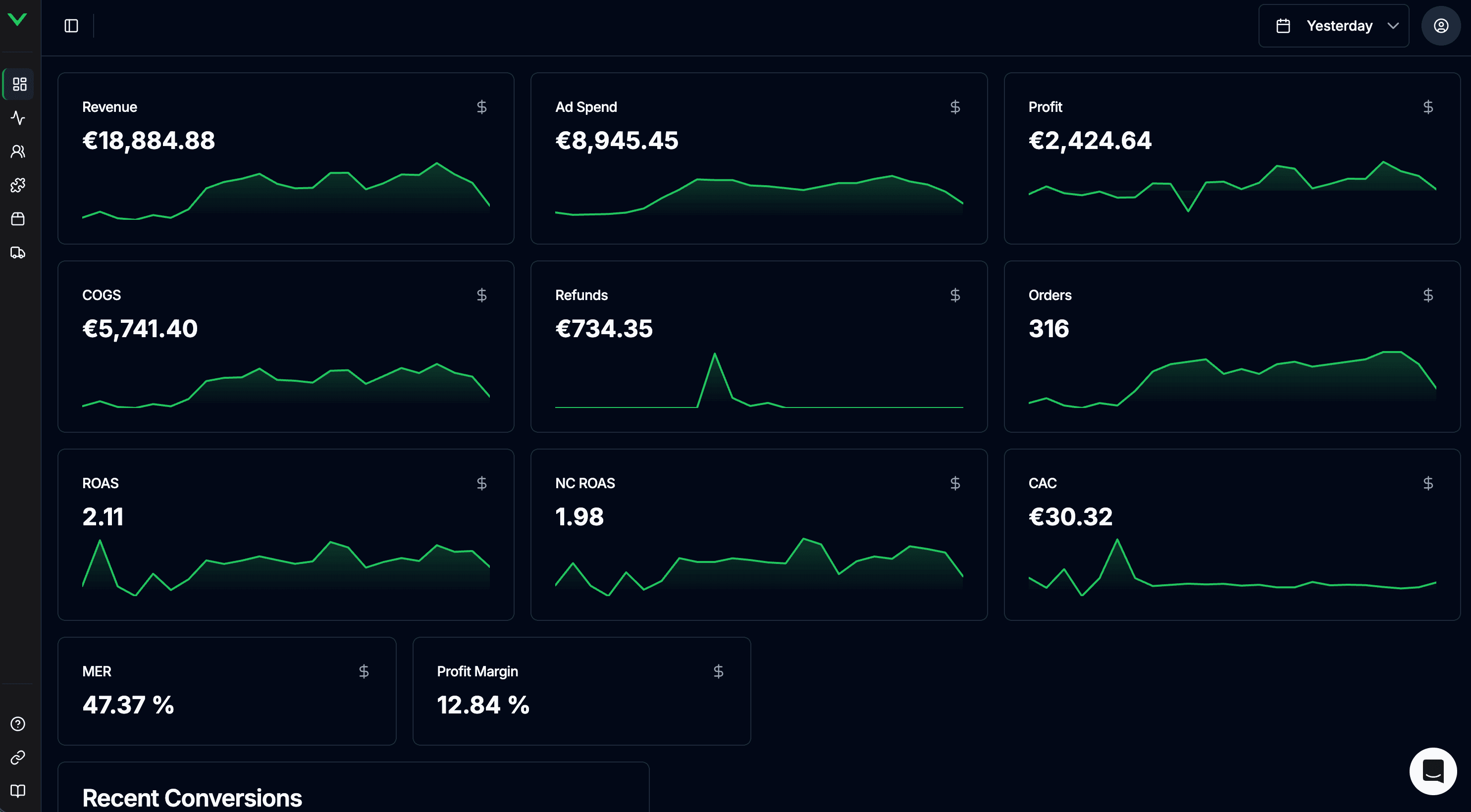
Venon does the thing Hyros does. Specifically for Shopify. At Shopify prices.
Setup is a Shopify app install and a UTM tweak. About 10 minutes.
Not marketing-minutes where it actually takes an afternoon. Real minutes.
Multi-store works out of the box at no extra cost. Nothing else on this list can say that without an asterisk.
The dashboard loads super fast. Servers are in Germany, so everything is GDPR compliant.
But the real reason to pick Venon over Hyros is Klaviyo.
That’s the same leak we break down in the Shopify abandoned cart recovery guide: Klaviyo can only recover carts it actually sees.
Venon feeds enriched cart events back into Klaviyo. That triggers 40% more abandoned cart emails on average. Observed Venon benchmarks show 32.7% average extra Klaviyo flow revenue. Hyros does not solve that Klaviyo recovery problem.
Then there’s the price. $199 a month at the $1M/yr tier. $99 below that. A 60-day money-back guarantee on the whole product.
If it doesn’t pay for itself in two months, you don’t pay.
Ideal for: Default pick if you’re on Shopify and don’t feel like paying Hyros money for Hyros features you’ll never touch.
2. Triple Whale
/i
Triple Whale starts at $149 a month.
That’s not the number that matters. Their pricing scales with your Shopify GMV. See Triple Whale pricing by GMV for the full plan table. You grow, they charge more. You don’t use any new features, they still charge more.
I’ve talked to $3M brands paying north of $799 a month.
They do give you a lot. Deepest native Shopify integration anywhere, Customizable Dashboard and Profit tracking rolled into attribution. 60+ connectors. A full BI layer with a SQL editor.
If your team works all of that daily, the price makes sense.
Most teams don’t. They log in, check ROAS, glance at a chart, log out. Paying enterprise prices for 10% feature use adds up fast.
Also worth mentioning is that the profit tracking is not super exact. For example, if the cost of goods changes, then it's impossible to only adjust it for the future. Your whole past data will also be wrong.
Where it falls short
- ✗Bill scales with your Shopify revenue, so growth gets expensive
- ✗Most of the good reports sit behind the Advanced paywall (cohort analysis, creative analysis, ...)
- ✗No Chrome extension, so you can’t see the data inside the ad platforms
- ✗The proof of tracking is not super exact
Ideal for: Fine if you’re Shopify Plus and your team actually uses all of it. Not fine if you just want ROAS and deep controlling.
3. Polar Analytics
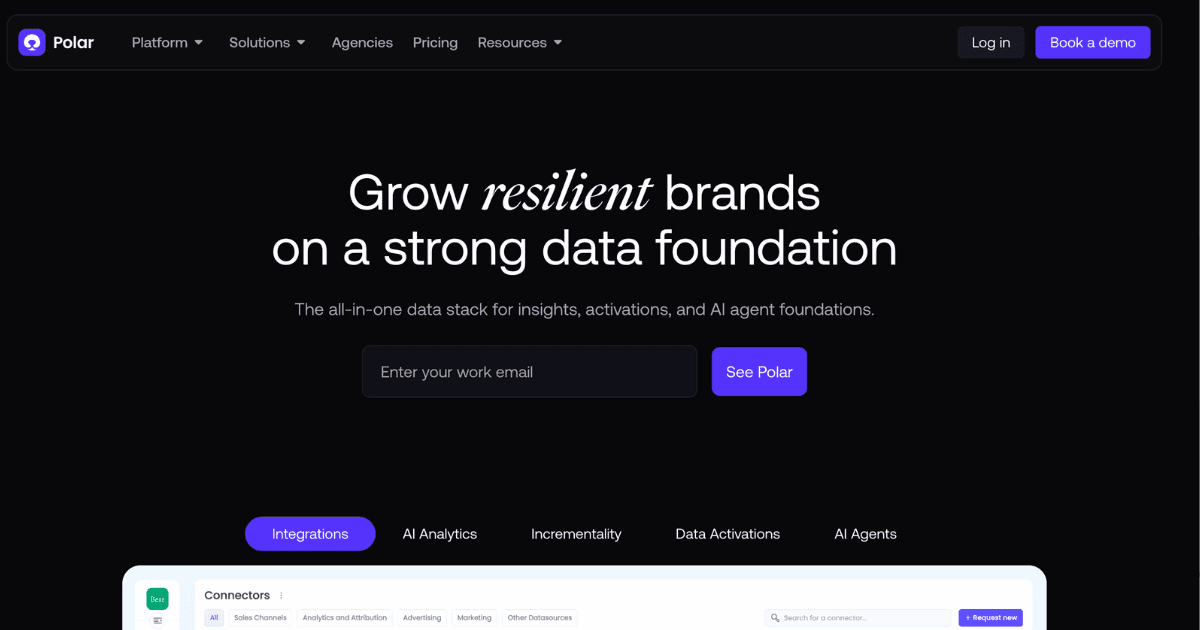
Polar has a lot of reports. You can analyze your churn rate. You can analyze your subscription count. You can analyze all kinds of metrics, also when it comes to email support and email marketing.
the nice thing about Polar Analytics is that they have an MCP connection, so you can connect it to your co-work or the AI of your choice deeper
Last time I heard it was around $400 a month at the $1M tier. Their pricing page won’t show you a real number without a sales call, which is always a little annoying.
And no multi-store support. You pay for each shop extra and have a separate dashboard.
Ideal for: Pick Polar if you care more about repeat customers than clicks.
4. Tracify
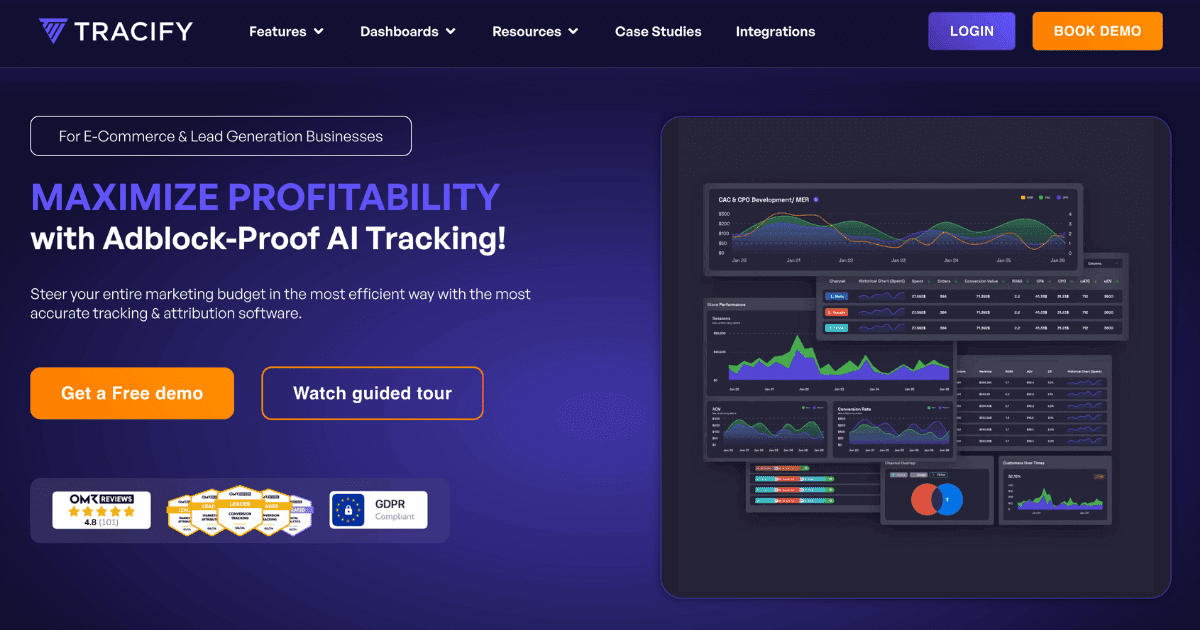
The first thing you notice about Tracify is the pricing.
It’s not one number. There’s a base fee, a cut of ad spend above a threshold, and a setup fee on day one.
Pricing Example
For a Shopify store with €1M/year revenue and €350,000/year ad spend (~€29,167/month):
€500 base + 1% × (€29,167 - €25,000) = €500 + €42 = €542/month
Plus a one-time €500 setup fee for Shopify stores (up to €2,000 for non-Shopify).
Total: €1,042 in month one, €542/month after that.
The tech is actually good.
Fingerprinting rebuilds the customer journeys iOS14 broke. It pushes attribution back to Google, Facebook, and TikTok. Servers in Germany, so GDPR is handled.
Setup is the hard part. Heavier than the others on this list. Plan for a developer if you don’t have one.
Where it falls short
- ✗Pricing is hard to estimate because it scales with your ad spend
- ✗No multi-store support
- ✗Setup takes real technical work, not just an app install
Ideal for: Worth it if German data residency matters and you can stomach the bill. Otherwise the pricing structure will drive you crazy.
5. Klar
Klar is mainly a profitability dashboard. Shopify orders, ad spend, COGS, and shipping in one view so you can see your real margin. It’s handy as a complement to an attribution tool.
It also added an attribution feature a few months ago, although it's not as advanced as Hyros for high-ticket funnel attribution.
It doesn’t send conversion data back to your ad platforms, so it can’t replace Hyros. Think of it as a tool that sits next to Venon, not one that fully replaces it.
Which Hyros alternative should you choose?
Choose Venon if you run Shopify and want attribution, CAPI, and Klaviyo Recover in one focused setup.
Choose Triple Whale if you want a broad BI suite and your team will use it daily. Choose Polar if retention analytics and enterprise reporting matter more than transparent entry pricing.
Choose Tracify if German-market tracking and server-side attribution are worth the heavier setup. Choose Klar if your main need is profitability reporting and margin visibility, not replacing the whole attribution layer.
Before choosing, compare ROAS vs contribution margin so you can distinguish attributed revenue from what remains after product, fulfillment, and marketing costs.
Feature Comparison Overview
Side by side:
| Platform | Pricing | Primary Strength | Limitation |
|---|---|---|---|
| Venon | $ | Dashboard speed, GDPR compliance | Newer market entrant |
| Triple Whale | $$$ | Deepest Shopify integration, all-in-one profit cockpit | Overwhelming dashboard with too many features |
| Polar Analytics | $$ | User interface, cohort analysis | Expensive, no multi-store |
| Tracify | $$$ | GDPR compliance, sending back data | High cost, setup fee |
| GetKlar | $$ | Deep controlling depth | Inaccurate tracking |
Frequently Asked Questions
Why do Shopify store owners look for Hyros alternatives?
Price is the main one. Hyros is super expensive. The setup is painful. Also all the reports are super complex to understand. Most users just use the chrome extension.
Which Hyros alternative offers the best value for Shopify?
Venon, if you’re on Shopify. Same server-side tracking as Hyros at about 40% of the price. Multi-store is included. No hidden paywalls. And there’s a 60-day money-back guarantee, so the downside of trying is pretty much zero.
Are these Shopify tracking tools GDPR compliant?
Not all of them. Venon and Tracify host in Germany, so customer data stays in the EU. Triple Whale and Polar are US-based. Technically compliant, but your data crosses the Atlantic. If you sell into Europe, that gap is bigger than most US vendors want to admit.
Which platform has the best Shopify integration?
Triple Whale, technically. Deepest native integration in the group. But Venon, Polar, and Klar all install in a few clicks too. The best integration depends on what you do with the data, not how you install it. Tracify is the only one that takes real technical work.
Do these platforms require technical setup on Shopify?
Depends on the tool. Venon and Triple Whale install in 10 minutes. Polar is similar. Tracify takes real work, usually a developer. Hyros is the hardest to set up. Which is half the reason you’re reading this.
Related reading
If your main issue is Klaviyo missing carts, read Abandoned Cart Recovery for Shopify. If you are comparing broader ecommerce suites, read Triple Whale Alternatives and Triple Whale pricing by GMV.
6 Triple Whale Alternatives That Save 60% on Costs • Abandoned Cart Recovery for Shopify: Complete Guide • Triple Whale Pricing in 2026
The Bottom Line
Hyros is a fine tool. It’s just not built for you.
If you run a Shopify store, Venon gives you Hyros-level tracking at a fraction of the price. Multi-store included. Klaviyo Recover included.
That’s the default pick for most brands who land on this page.
Triple Whale works if you want the all-in-one cockpit and your team will actually use every feature. Klar works if what you need is margin reporting, not attribution.
Whatever you pick, pick something. Paying Hyros prices when you don’t need to is a monthly tax on your ad budget. It compounds.